


There is a difference between sheets described as 'cooling' and sheets that actually keep you cool. The gap is in the weave, the fibre, and whether the material moves heat away from your body rather than simply starting cold and then trapping it.
We make sheets. We know what these materials do in practice. What follows is the unvarnished version: what each fabric does well, where it falls short, and which one we would reach for on a warm UK night.
There is a difference between sheets described as cooling and sheets that actually cool. The gap is in the weave, the fibre, and whether the material moves heat away from your body rather than simply starting cold and then trapping it.
We make sheets. We know what these materials do in practice. What follows is the unvarnished version: what each fabric does well, where it falls short, and which one we would reach for on a warm UK night.
What actually makes a sheet cool?
Weave structure, fibre type, and thread count. In that order, with thread count a distant third.
The weave controls airflow. An open one-over-one-under weave, like percale, lets air move between you and the fabric. A denser weave, like sateen, creates a smooth surface that feels pleasant but holds heat. This is why thread count is a poor guide to summer suitability: a 600-thread-count sateen sheet is a worse summer choice than a 200-thread-count percale.
The fibre determines how moisture is handled. Linen's hollow fibres wick perspiration from the body and cool rapidly. Cotton's solid fibres absorb moisture but release it more slowly. Silk's protein structure adjusts to body temperature rather than passively holding heat.
Thread count, to reiterate, mainly affects longevity and feel. A lower count in percale is not a sign of corners being cut. It is often a sign of better breathability.
The four fabrics compared

Percale cotton
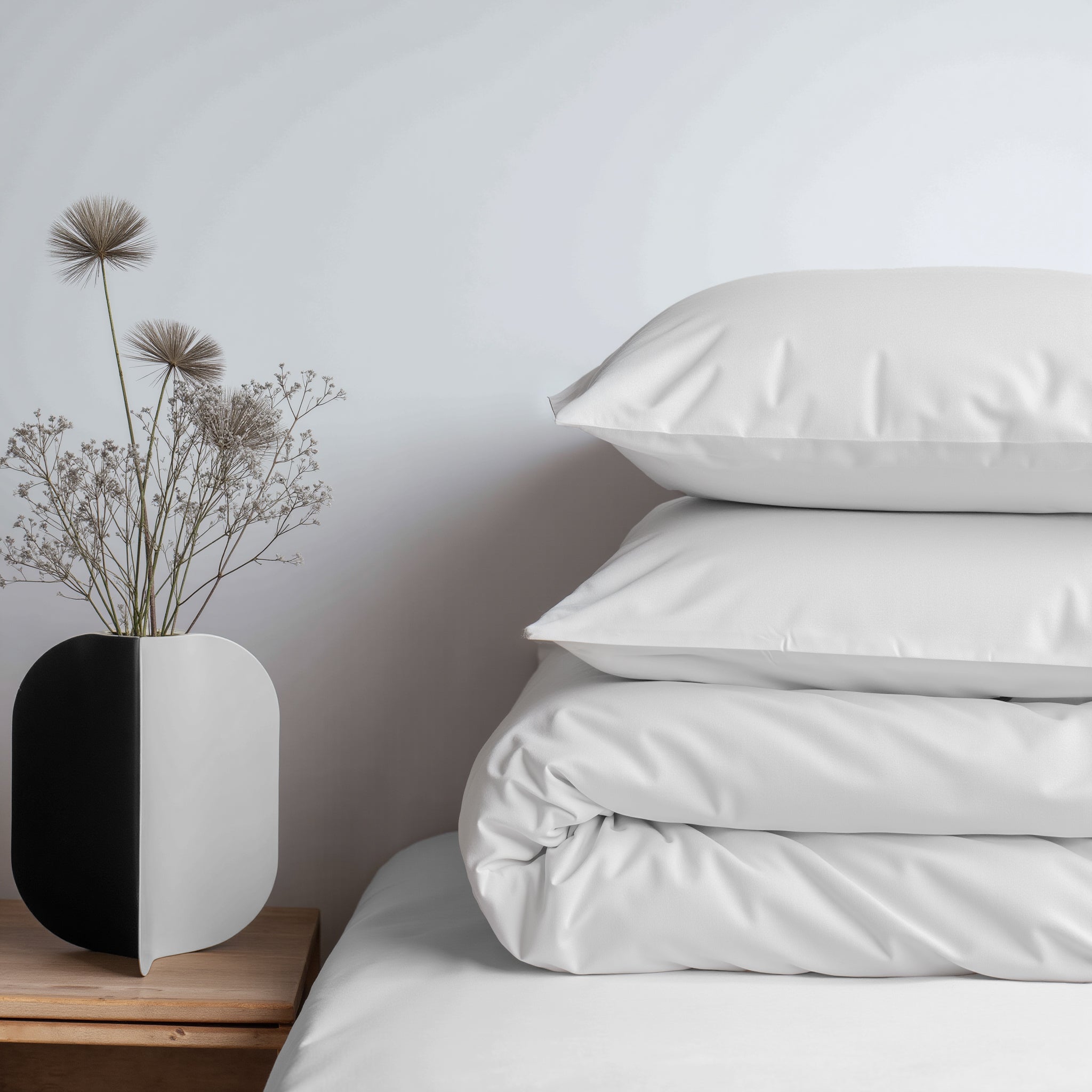
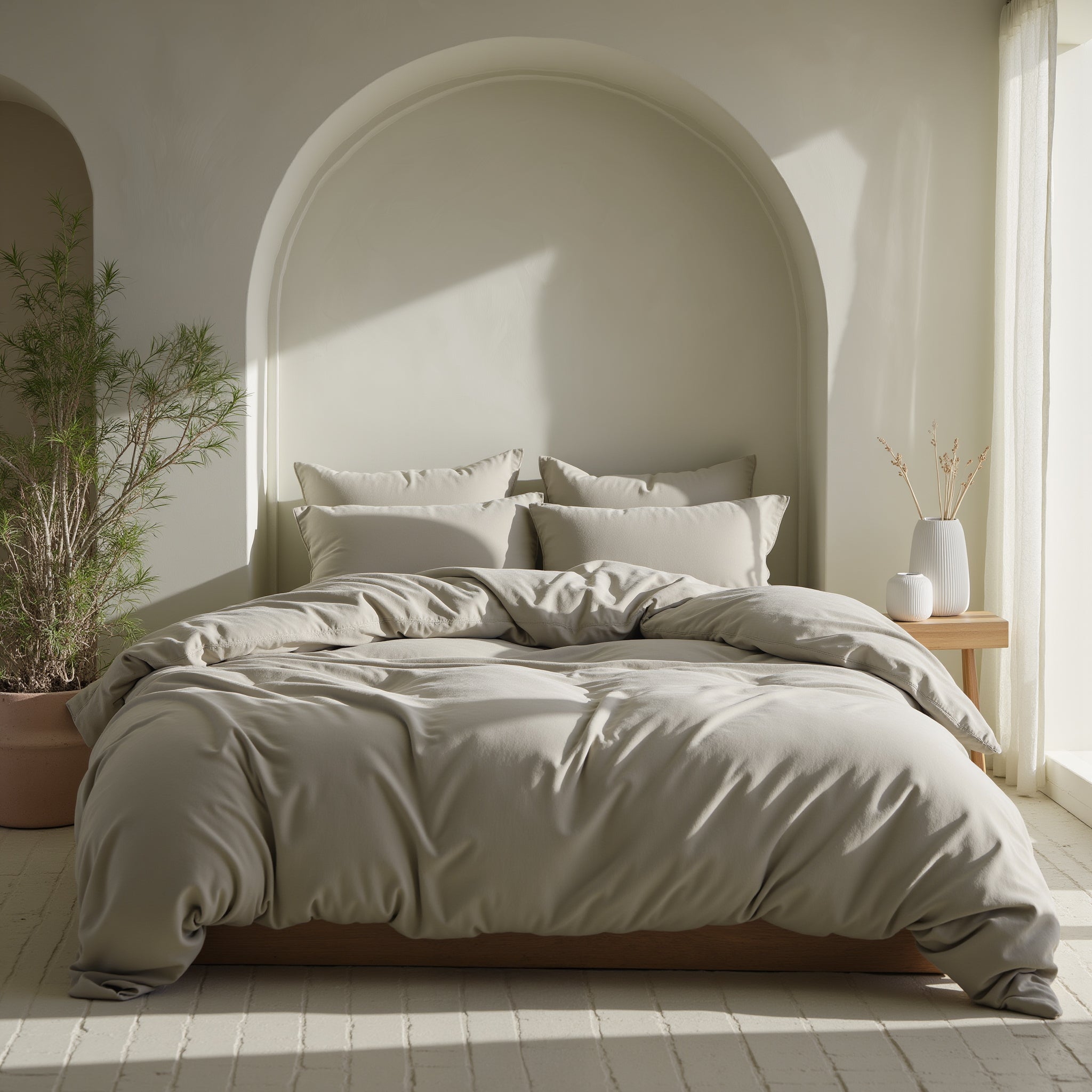
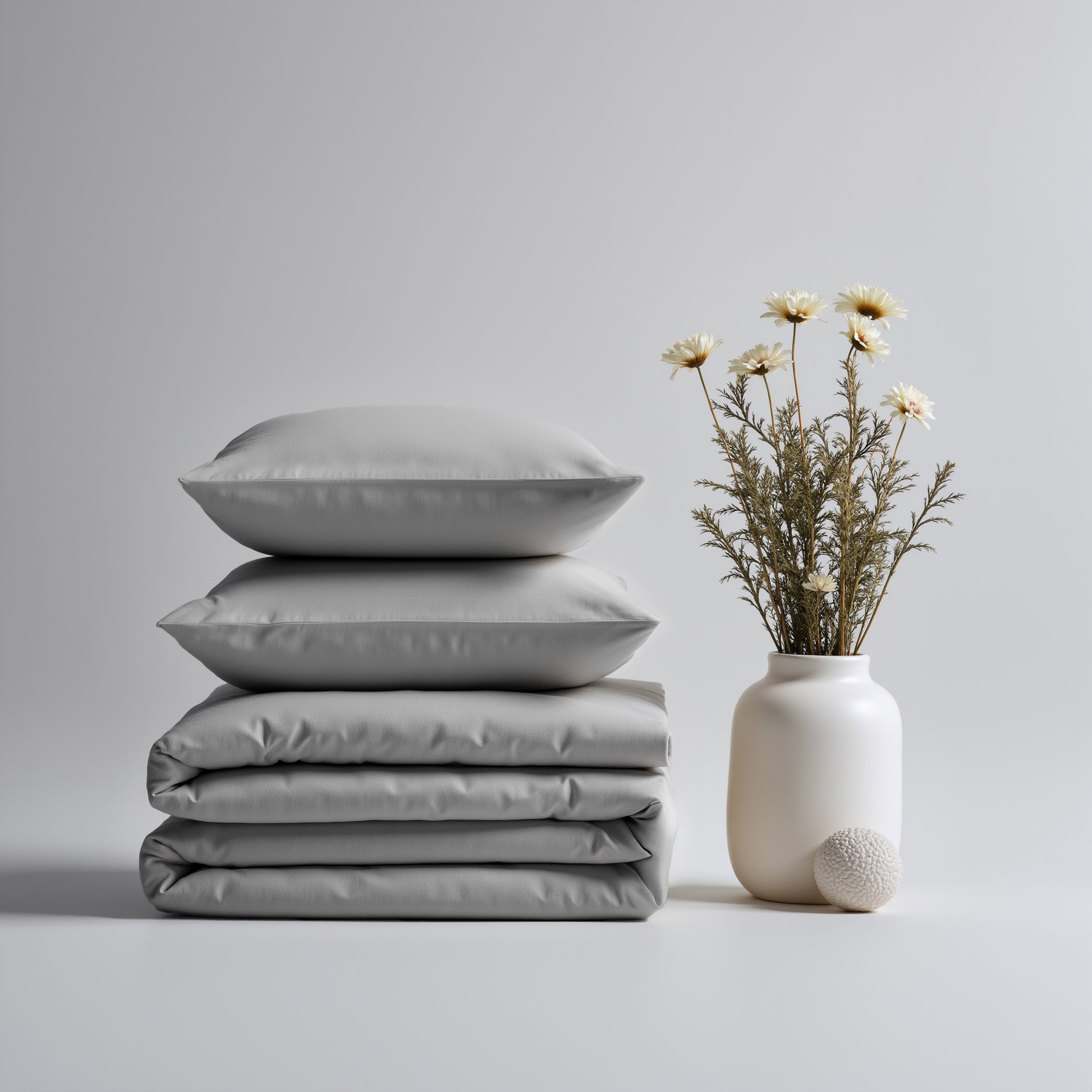
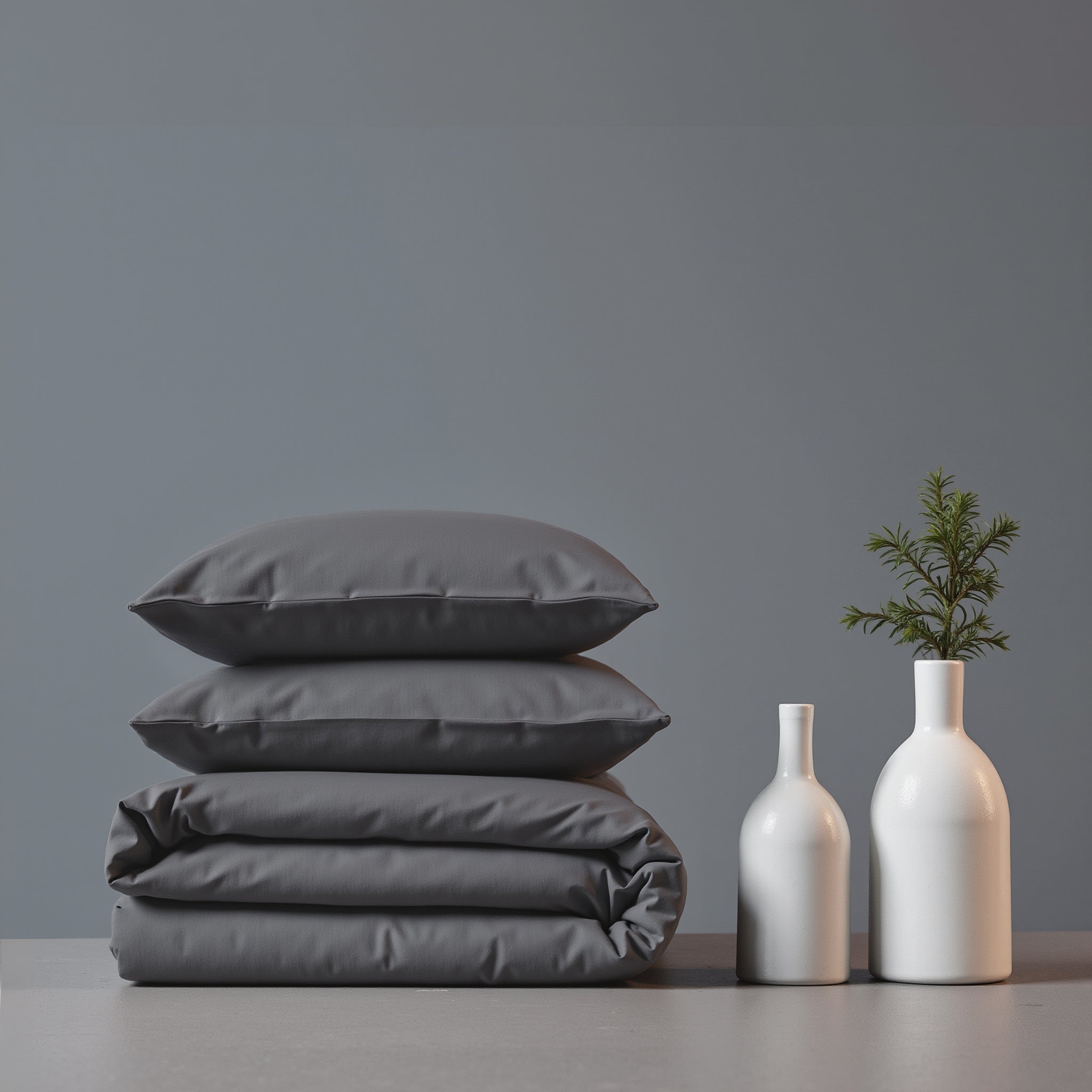
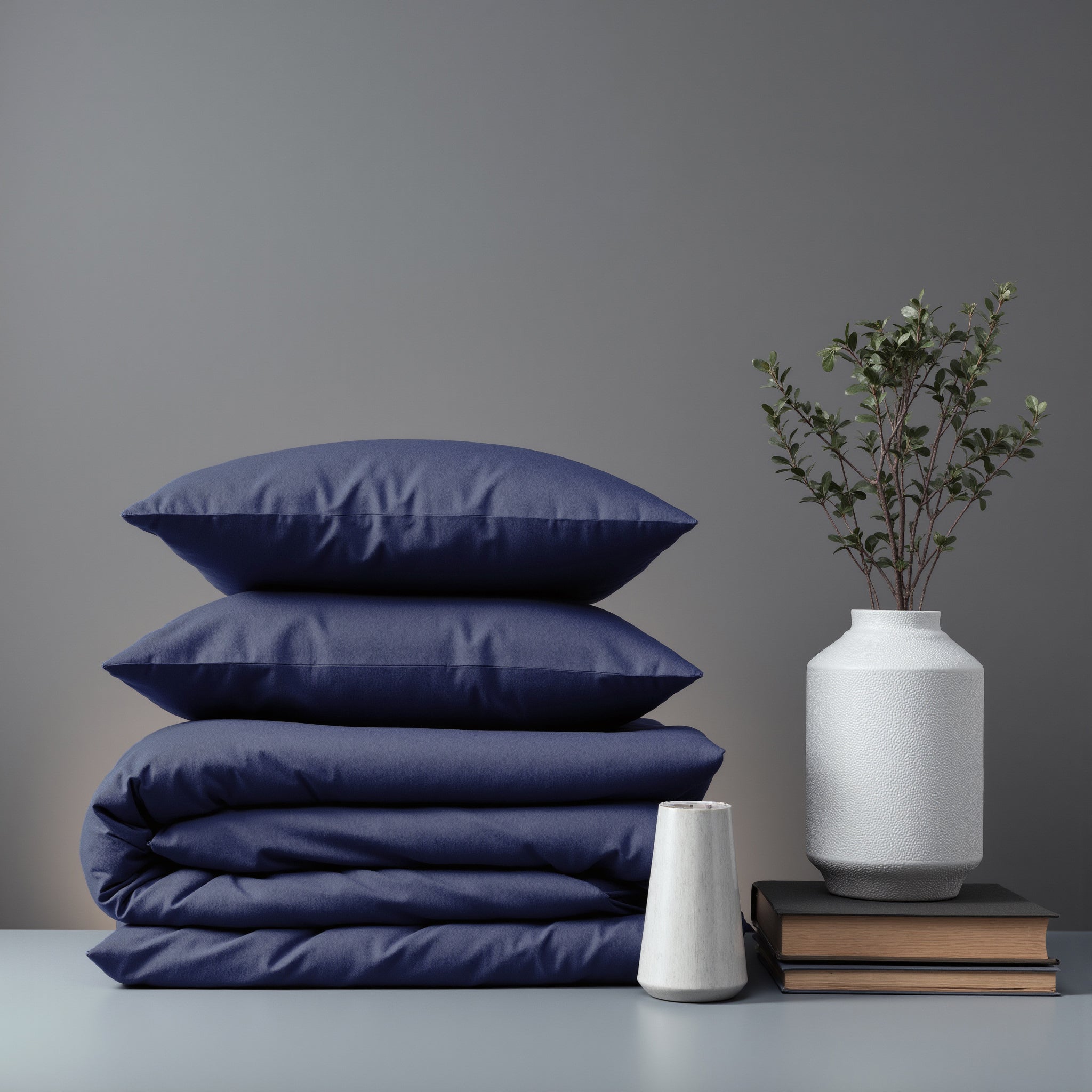

Percale is the default summer sheet for good reason. It is crisp and cool when you first get into bed, stays that way because the weave keeps dissipating heat rather than trapping it, and it is straightforward to care for. Most hotels use it, not for its luxurious feel but because it works: guests sleep at a consistent temperature.
Our percale sheets are 100% cotton percale in all sizes. We also make a complete percale bedding set, a percale duvet cover, and percale pillowcases separately. For more on the material, our percale bedding guide covers the technical side.
Linen
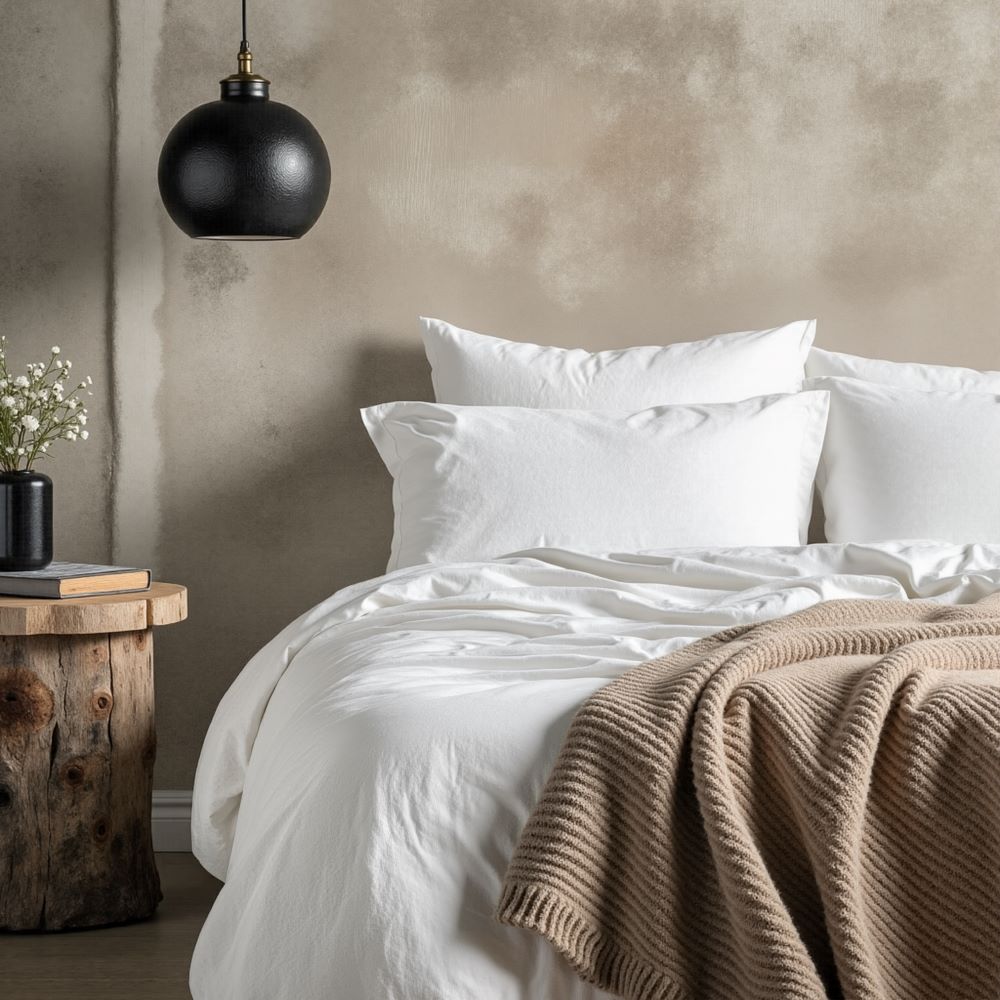
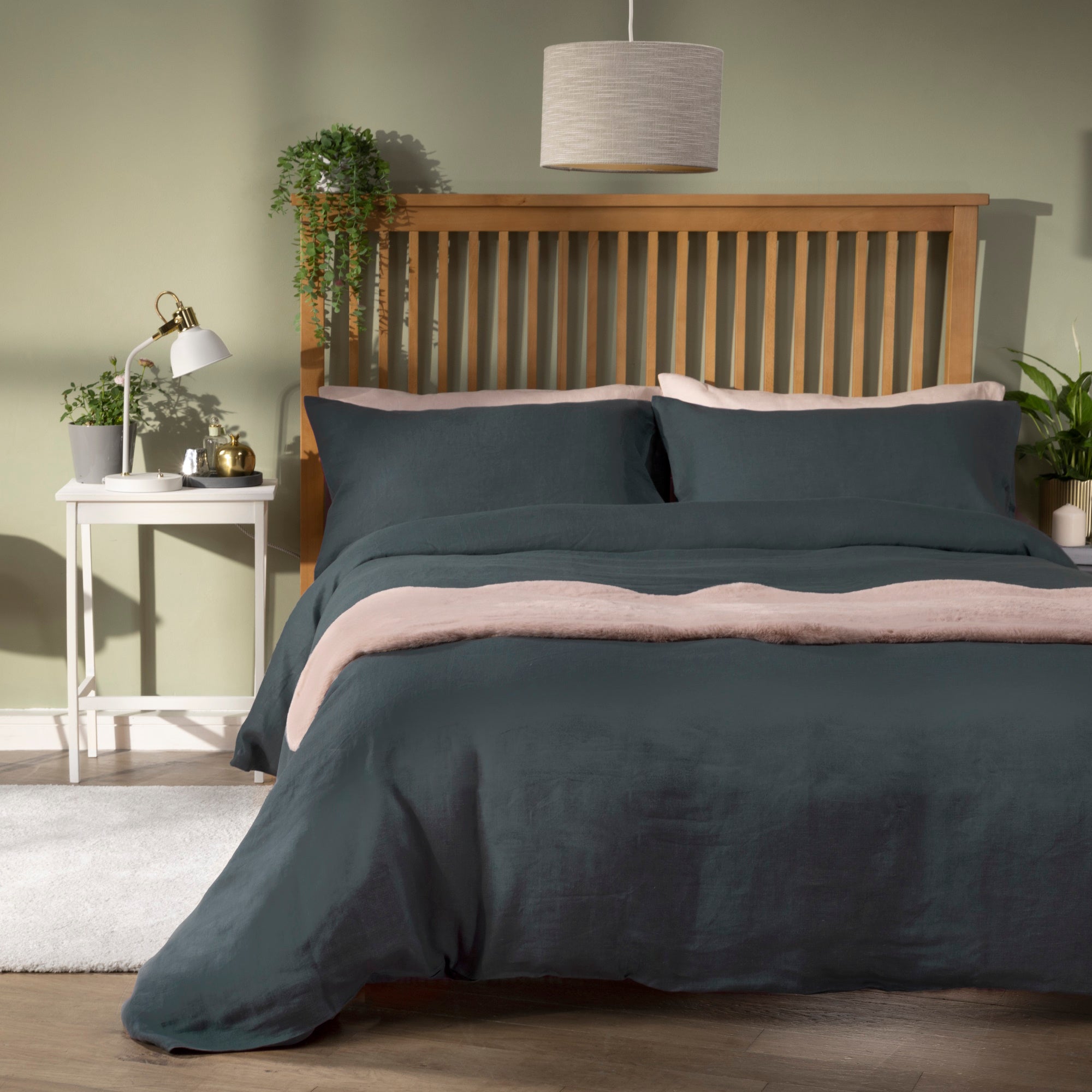

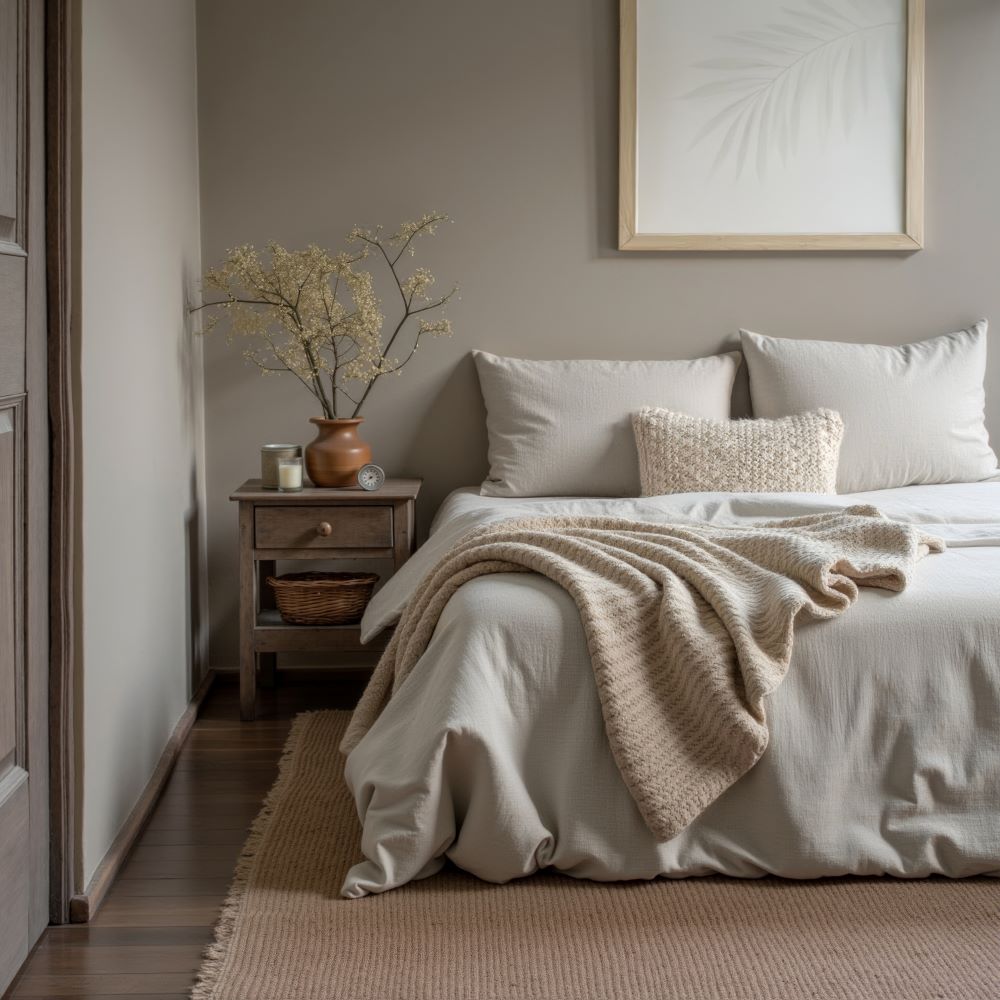
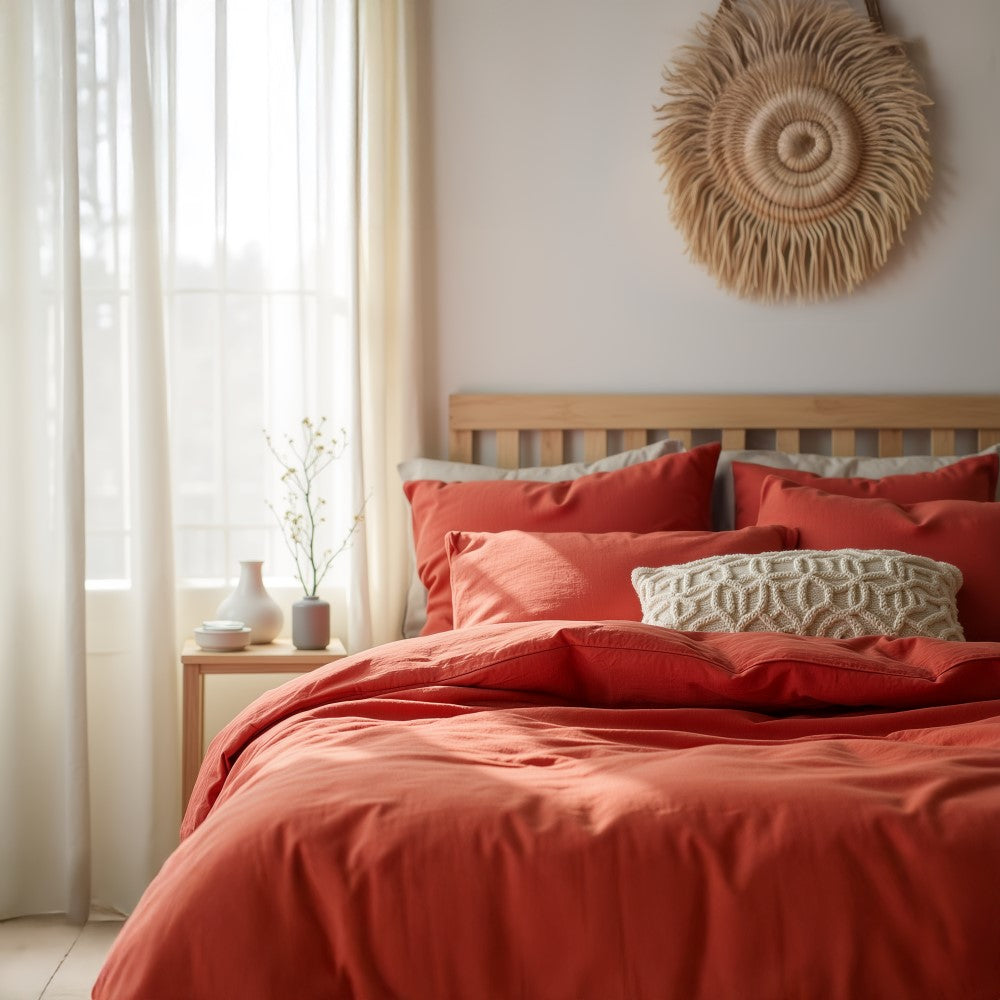

Linen earns its reputation as the premium summer upgrade. The hollow flax fibres wick moisture from the body and cool down faster than cotton after absorbing heat. It also gets better over time, which is unusual for bedding: the slight crispness of new linen gives way, after five or six washes, to something softer and more characterful than most other fabrics manage even when new.
The honest caveats: linen wrinkles. That is what it does, and there is no version where it does not. If you want a pressed, smooth bed, percale will serve you better. If the condition of your unmade bed is not something you lie awake worrying about, linen is the better summer choice.
Our linen sheets and linen duvet covers are made from European flax linen, available in a wide range of colours. For a full comparison of linen and cotton in practice, see cotton vs linen bedding: which is better for summer sleep.
Cotton sateen


Sateen is a beautiful fabric and we make it. Our 600 thread count sateen bedding set is among the best things we make. But recommending it as a summer sheet would be doing you a disservice. The sateen weave exposes more threads on the surface to create that signature silky feel, and this reduces airflow through the fabric. It retains more heat than percale, significantly more than linen. For a cool spring evening it is wonderful. For July, it is the wrong call.


